

In fantasy, we often spend a great deal of time mapping out continents and naming mountain ranges. But the most immersive world-building doesn’t happen on a map; it happens in the kitchen, the workshop, or the garden. It happens when we view a mundane, domestic setting through the eyes of our character, someone—or something—fundamentally different from ourselves.
When a character’s species or magical affinity is woven into their biology, it changes how they interact with the world. It’s not just about what they can do; it’s about how they perceive.
The Sensory Shift for a Character
Consider Yolena. As an Aquifer, her connection to the land isn’t a distant power; it’s a physical sensation. When she stands in her cottage in Oakhaven, she doesn’t just see a wooden floor and stone walls. She senses the “current” of the world. A simple bowl of water isn’t just a household object; it’s a medium for communication, a mirror for the glowing blue-green aura of her hair, and a reminder of the ley lines being stifled by the village’s greed.
To an Aquifer, a drought isn’t just a weather event—it’s a personal silence.
Domestic Settings, Fantastic Stakes
When you place a mythical creature or a magically-attuned being in a domestic setting, the ordinary becomes extraordinary.
- The Hearth: For a human, it’s warmth. For a creature born of fire or shadow, it might be a source of ancestral whispers or a dangerous temptation.
- The Garden: For a gardener, it’s a hobby. For a character like those in The Weaver’s Gambit, it’s a battlefield where the health of the soil reflects the political rot of the leadership.
- The Loom: For Yolena, her loom is a tool of her trade, but through her eyes, it is also a weapon. Every click of the shuttle is a heartbeat; every thread is a potential secret.
How to Apply This to Your Writing
If you want your readers to truly “feel” your world, you must ask yourself how your character’s unique nature filters their reality.
- What is their dominant sense? Does a shifter smell the metallic tang of fear before they see a smile?
- What is “Normal” to them that would be strange to us? Perhaps they find the concept of a locked door absurd, or they view the passage of time in seasons rather than hours.
- What are the physical costs? In Ascendia, magic isn’t free. The physical flare of energy or the ringing in the ears after a feat of magic reminds the reader that the character is part of a living, breathing system.
Build Your Lead’s Perspective
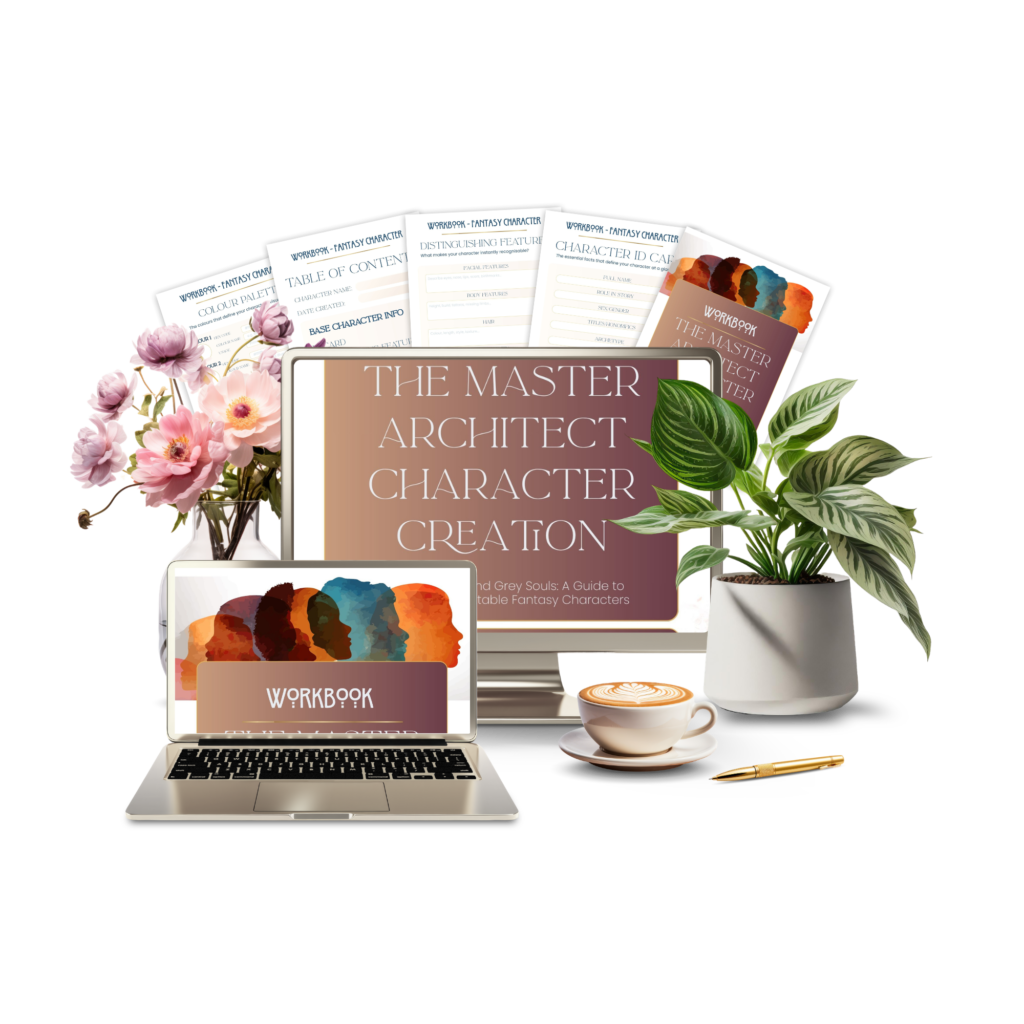
Understanding how your lead sees the world is the key to moving from a “cardboard” setting to a living world. If you’re ready to dig into the sensory details of your protagonist—whether they are human, mythical, or something in between—my Master Architect Character Creation digital workbook has a dedicated section on “Internal Psychology.”
Currently there is a 50% discount available to newsletter subscribers, through the link below.
Stay tuned for tomorrow’s update, where we’ll catch a glimpse of the first incarnation of the spirit guides of Ascendia—the tiny golden orbs.