
The village of Tyrmarse breathed in rhythm with Sybil’s mortar and pestle. To the neighbours, she was the saint of the hillside, the woman who kept the Great Ague at bay with her foul-smelling tinctures and tireless devotion. Theywere unaware of her great deception, they didn’t see the secret she kept in the shadows of her cellar: a manticore named Turstin.
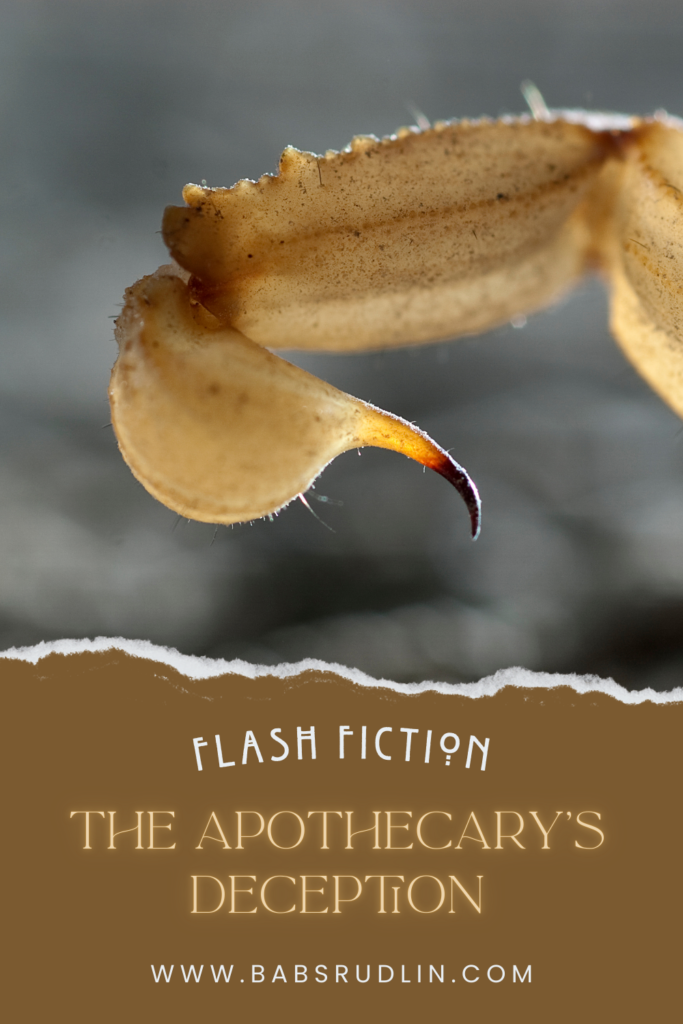
Turstin was not the beast of legend. He was old, his lion’s mane thinning and his scorpion tail heavy with an arthritic ache. He was Sybil’s greatest secret and her most effective tool.
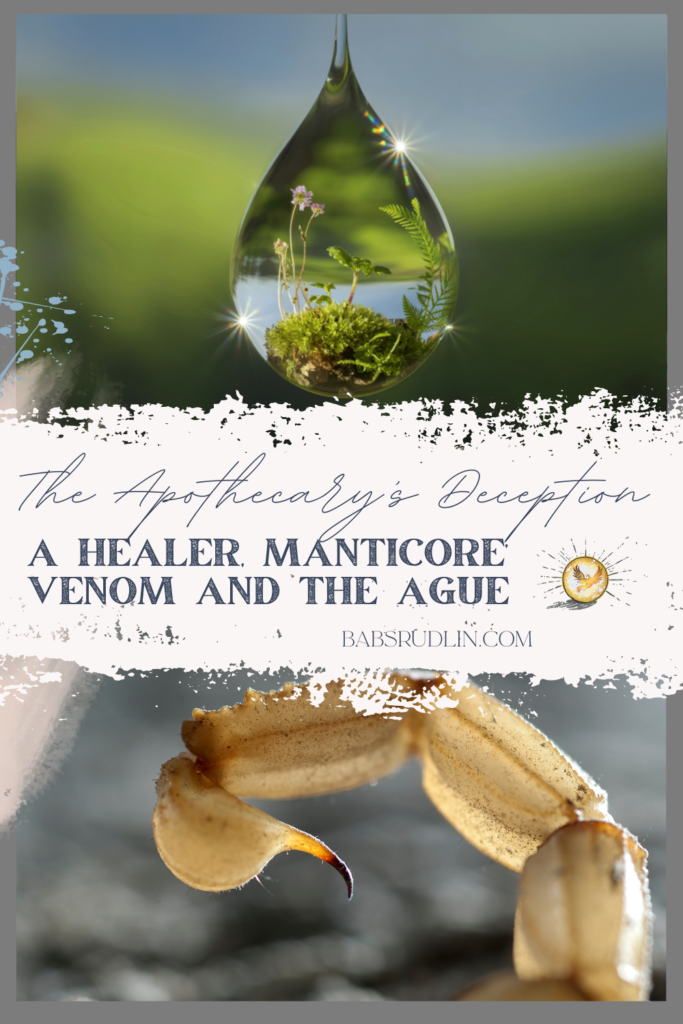
Each morning, Sybil descended the stone steps to the cellar. She didn’t approach him with a sword, but with a bowl of warm goat’s milk and a soft cloth to wipe his lion’s brow—a caring gesture for a creature most would slay on sight. Sybil had kept him safe, known him since he was a cub in the forest. She had saved him from the hunters of the passing army. In return, Turstin offered his tail. Sybil would expertly milk a single, pearlescent drop of venom into a glass vial.
Diluted one thousand times, the venom didn’t kill. It merely mimicked the symptoms of a lingering malaise—night sweats, a slight tremor of the hands, a weary heart.
Sybil walked through the village, her satchel heavy with “cures” that were actually clever toxins. She visited the Blacksmith, whose cough never quite cleared but never worsened. She visited the Miller’s wife, whose dizzy spells kept her confined to her sun-drenched parlour.
“You’re a marvel, Sybil,” the Blacksmith wheezed, clutching his vial of blue liquid. “Don’t know what we’d do without you.”
Sybil smiled, her heart a tangled knot of guilt and necessity. She wasn’t doing this for gold; she did it for the village’s own good. Before she took over the practice, the village had been gutted by young men leaving for the wars and families moving to the soot-stained cities. By keeping them “just sick enough,” she ensured they stayed. She created a community that needed one another, a congenial circle that was stable, quiet, and safe.
She was the controller of their health, and she held the reins tight in her hand.
However, the depth of her deception was beginning to weigh on her. She saw the aurora borealis blaze through her window at night and remembered that the world was larger than Tyrmarse. She wondered if she was the healer or the jailer.
The turning point came when a young girl, Mara, fell truly ill. Not the “manticore-malaise,” but a real, searing fever that Sybil’s tinctures couldn’t touch. Mara was the light of the village, a child who saw golden orbs in the woods where others saw only shadows.
As Mara’s breath grew shallow, the village gathered outside Sybil’s cottage. Their “lingering illnesses” were forgotten in the face of a true crisis. The Blacksmith brought wood for the fire; the Miller’s wife brought cooling cloths. They were acting as a community, but Sybil knew her medicine was failing.
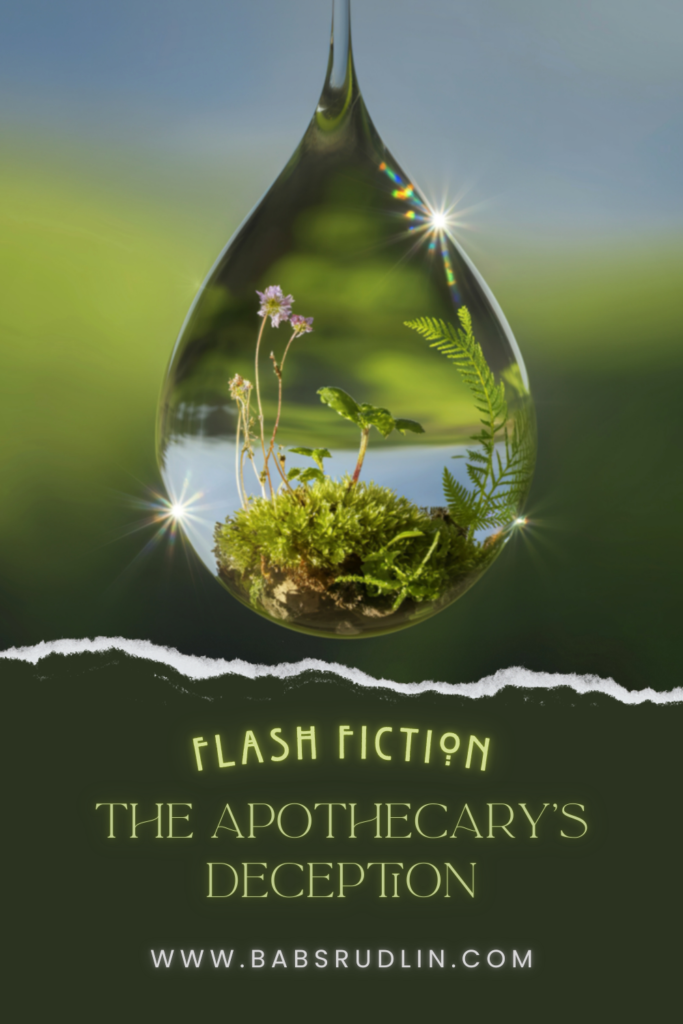
She looked at the glass vial of Turstin’s venom. Then, she looked at the ancient, dusty volume of “Ventus’ Remedies” hidden behind her spice rack. There was a recipe for The Æther-Tear Restorative—a tincture, designed to mend what is broken, whether it be a lingering ague or a heavy heart.
The restorative required a manticore’s tear, harvested not through force, but through a genuine moment of shared grief or relief.
Sybil descended to the cellar. Turstin looked at her, his lion-eyes wise and weary. She didn’t use the cloth this time. She sat on the cold floor and told him the truth. She told him about Mara, about the lies she had woven to keep the village together, and about her fear that she had turned her home into a graveyard of the living.
For the first time in years, she cried. And Turstin, the beast she had used as a tool, rested his tired head in her lap. A single, heavy tear escaped his eye and fell onto her hand.
Sybil rushed upstairs. She brewed the antidote, adding the tear to a base of lavender and crushed pearls. She administered it to Mara, but she didn’t stop there. She took the remaining batch and went to the village well.
With a trembling hand, she poured the antidote into the water.
She expected the village to wake up angry. She expected them to realise the lie and cast her out into the Forbidden Woods. She prepared herself for the devastation of being drummed out of the village, of their resentment.
But the next morning, the village didn’t wake up in a rage. The villagers awoke animated.
The Blacksmith’s lungs cleared, and he spent the afternoon fixing the broken fences of older people in the village. The Miller’s wife stood on her porch, her dizzy spells gone, and began planning a harvest festival. They felt the surge of health not as a discovery of a crime, but as a miracle granted by their devoted healer.
Mara sat up in bed, her fever gone, pointing at the window. “Look, Sybil! The orbs are dancing.”
Sybil stood by the well, watching her neighbours. The village was no longer bound to her by sickness; they were all connected by the care they had shown when things were at their darkest.
She returned to her cottage and opened the cellar door. She didn’t bring a vial. She brought a harness.
“The world is significantly larger than this village, Turstin,” she whispered, stroking his mane. “I think it’s time we both saw the aurora from the other side of the lake.”
She didn’t leave as a fugitive. She left as a woman who had finally learned that power isn’t something you hold over others to keep them safe—it’s something you give them so they can find their own way.
Hungry for another twist? View the complete collection of flash fiction and deep dives right here.